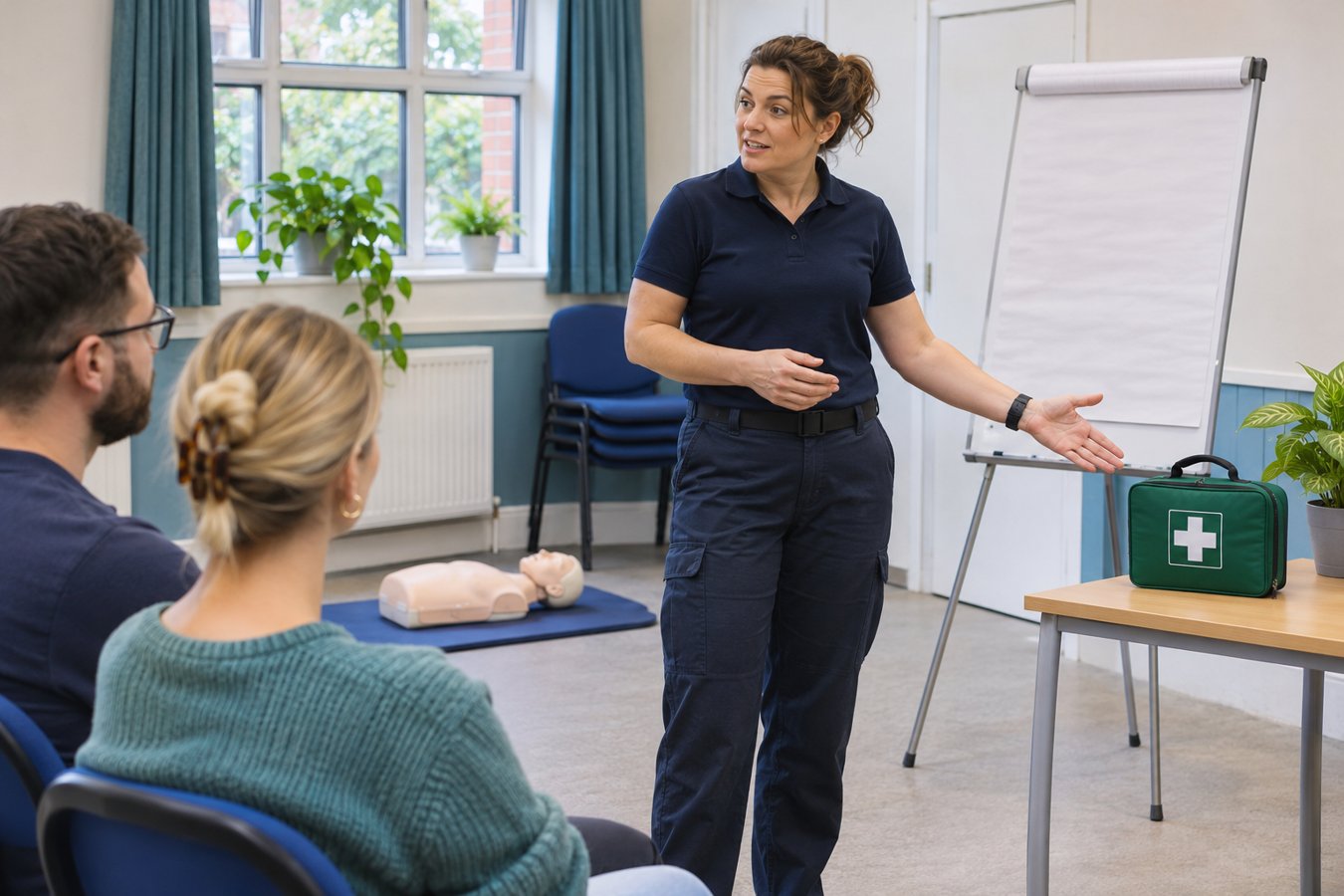
When someone collapses or is seriously injured at work, the first few moments can feel chaotic. The primary survey gives first aiders a way to spot immediate threats to life, act on them and get help early.
If you learned DRABC on an earlier course, the first C in DRCABCDE is the change you’ll notice. It prompts you to look for catastrophic bleeding early. The 2025 Resuscitation Council UK first aid guidance prioritises scene safety, responsiveness and life-threatening bleeding before using ABCDE to structure the rest of the assessment. DRCABCDE is a way to remember those priorities in training.
What does DRCABCDE stand for?
Follow this sequence step by step. Act on urgent problems as you find them and keep reassessing.
| Step | Assessment & key question |
|---|---|
DDanger | Is it safe to approach? Look for hazards such as traffic, machinery or electricity. |
RResponse | Does the person respond when you speak to them? If an adult is unresponsive, call 999 immediately and assess breathing while the call connects. |
CCatastrophic bleeding | Is there obvious life-threatening bleeding? Get emergency help and apply firm, direct pressure to the wound. |
AAirway | Is the airway open and clear? |
BBreathing | Are they breathing normally? If an adult is unresponsive and breathing abnormally or has stopped breathing, start CPR and use an AED as soon as one is available. Follow the call handler’s instructions. |
CCirculation | Look for other bleeding and signs of shock, such as pale, cold or clammy skin. |
DDisability | Check their level of alertness and watch for changes, such as increasing confusion or drowsiness. |
EExposure and environment | Look for other injuries as needed, protect the person’s privacy and keep them warm. |
Important: Act on urgent problems as you find them and keep reassessing. In an emergency, follow the 999 call handler’s instructions.
Why are there two Cs?
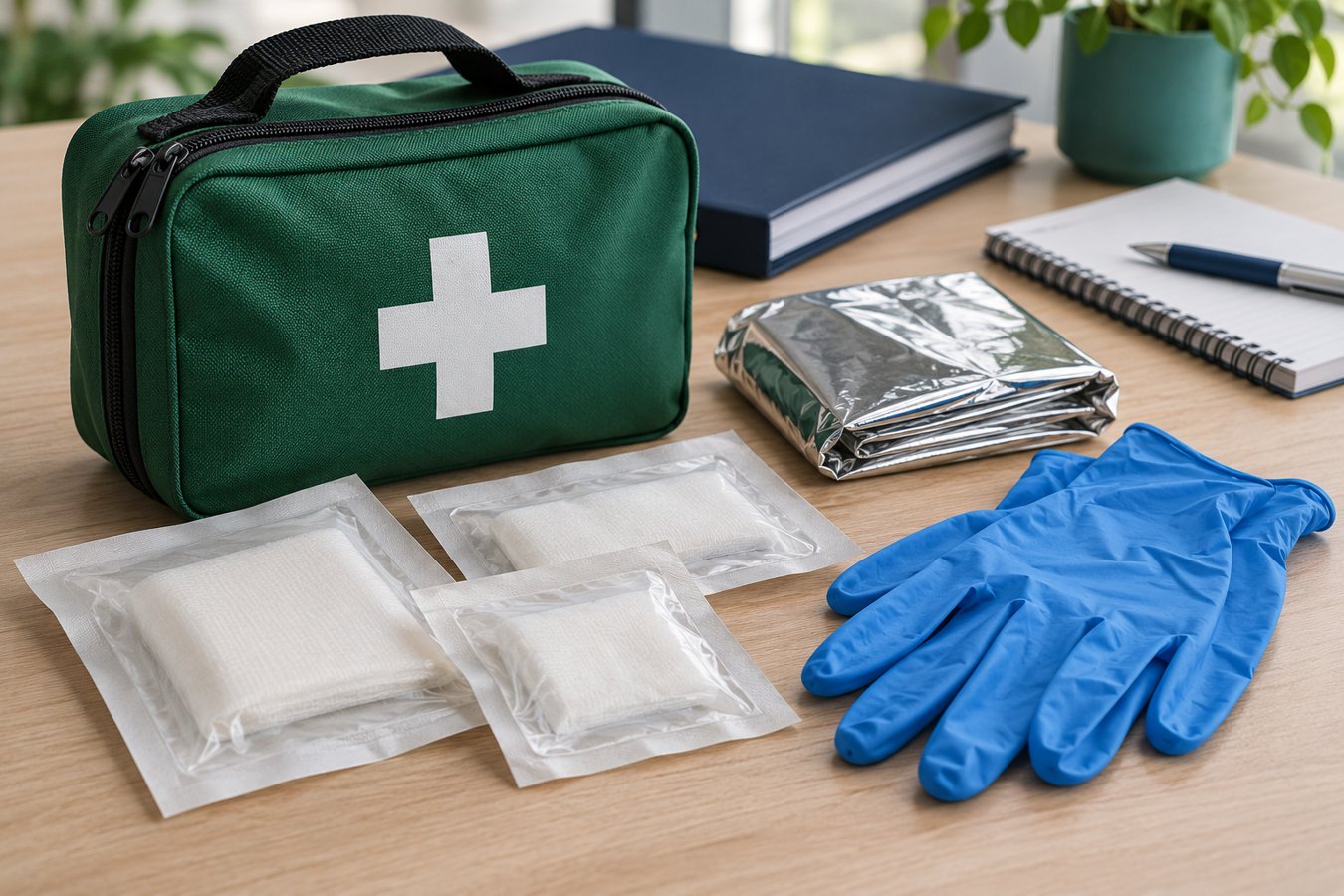
The first C is for obvious bleeding that could threaten life and needs immediate attention. The second C is the wider circulation check after airway and breathing. In a team, one person can call 999 while another applies direct pressure to a life-threatening bleed. Practising who does what helps staff act together when it matters.
Practise the primary survey with your team
JACT Wellness delivers on-site group first aid training across the UK for workplaces, schools, academy trusts and nurseries. Tell us your training postcode and how many people need training. We’ll help you choose the right course for your setting.